What changes in Turin's master plan: updates and impacts for buyers and renters
by Marco Balistreri · · 5 minute read
What changes in Turin's master plan: overview for buyers and landlords
The Turin master plan Defines the rules governing how the city's land can be built upon, transformed, and used. When the plan is updated, the effects impact prices, renovation opportunities, land uses, and the quality of the urban environment. This guide covers the most common updates from a plan revision and what they mean concretely for those buying, selling, or renting in Turin and surrounding areas.
1. Zoning and land uses: more mixed, less segregated
A common trend in master plan updates is promoting mixed land uses: residential together with commercial, light tertiary, and services. This means areas previously strictly residential may open up for shops, professional studios, or co-working spaces. For buyers, this can translate into better livability and amenities nearby; for landlords, it offers the chance to diversify tenant profiles (students, professionals, local businesses).
2. Densification and new construction: opportunities and challenges
Updated plans often allow slight increases in building density in some urban areas to limit land consumption and enhance existing areas. In Turin, this may involve infill developments (filling gaps between existing buildings) or revitalising disused areas. Benefits: more housing supply and urban renewal. Risks: pressure on local services and parking. Always assess impact on the area before buying.
3. Urban green spaces, sports areas and ecological corridors
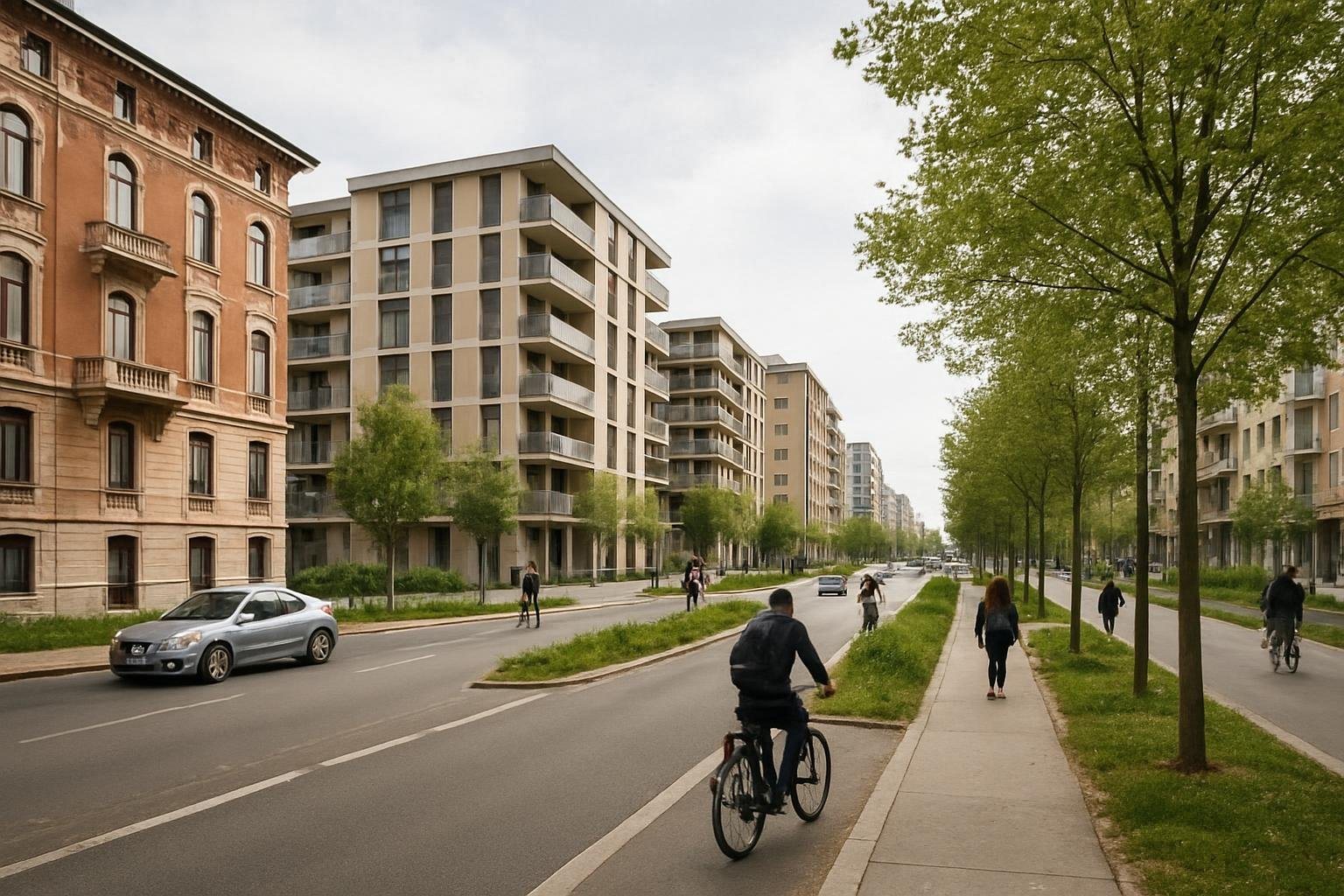
An updated master plan tends to strengthen the urban green network: parks, street trees, playgrounds and ecological corridors connecting suburbs and surrounding belt. For house hunters, proximity to green spaces improves quality of life and can affect property value. For landlords, properties near parks are often more attractive to families and pet owners.
4. Mobility, parking and accessibility
Plan revisions also consider transport networks: new cycle lanes, limited traffic zones, public transport expansion and parking regulations. If the plan promotes sustainable mobility, lack of private parking may be less of an issue; however, in less served areas this can affect value and demand. For landlords, highlighting good transport connections is vital.
5. Historical constraints and heritage protection
Turin has a historic centre and many protected buildings: the master plan reinforces tools for safeguarding monuments and historic fabric. This limits intervention possibilities but preserves architectural and historic value. Before buying, check for landscape or heritage restrictions that may require specific permits and increase renovation costs.
6. Urban regeneration and redevelopment of disused areas
A focal point is promoting urban regeneration: transforming former industrial zones into residential or mixed-use neighbourhoods, with public spaces and amenities. These developments can create new investment opportunities but often involve long timeframes. If considering a purchase in transforming areas, research planning details and expected delivery times for public works.
7. Rules on energy efficiency and housing quality
New plans often include criteria for building environmental quality: insulation, solar orientation, renewable energy use, and hydrogeological risk control. This affects renovations: tax deductions and incentives may be available for energy upgrades, but technical requirements can also raise intervention costs.
8. Impact on Turin's real estate market and surrounding areas
Plan changes have varied effects depending on district: central, well-served areas may see revaluation, while peripheral zones with planned infrastructure may attract demand in the medium term. For investment evaluation, compare planned transformation with local demand: students, young couples, families, or investors. For the belt area or neighbouring municipalities, consult local analyses: for example, urban changes may influence markets such as Rivoli or Collegno.
How to navigate if you are buying, selling or renting
Practical decisions depend on your goals. Here's a list of concrete suggestions:
- For buyers: Check the plan forecasts for the plot and the context: new public works planned can increase value, but also construction timelines. Check restrictions and land uses.
- For sellers: Highlight the location's value in relation to new services and planned green spaces; explain how the neighbourhood transformation can improve quality of life.
- For landlords: Adapt the offer to the new mix of land uses and expected demand (e.g. contracts for students or professionals if educational or work hubs emerge).
- For investors: Assess public works completion times and the risk of oversupply in overly densified areas.
Checks and practical steps
- Consult the municipal urban planning tools and locally approved amendments.
- Request information from the municipal technical office on restrictions and implementation forecasts for the area.
- Speak with professionals (surveyors, architects, builders) to estimate upgrade costs and timelines.
- Evaluate local market demand: who is looking for housing in that neighbourhood and why.
If you want to explore practical examples related to neighbouring municipalities, you can read our insights on Rivoli and on Collegnowhich show how urban transformations influence local markets.
Final practical tips
1) Before any purchase always verify the area's urban planning forecasts and restrictions. 2) Consider the quality of services and mobility connections: these often matter more than the individual property. 3) If considering renovations, assess energy requirements and technical feasibility from the outset. 4) For medium to long-term investments, carefully weigh urban regeneration timelines.
If you would like personalised advice on your area of interest in Turin or neighbouring municipalities, contact us: we can help you interpret the master plan and evaluate opportunities for your real estate operation.
Do you have questions about this topic or your property?
Talk to us