Retirement: is moving city worthwhile? Impacts on housing and budget
by Marco Balistreri · · 5 minute read
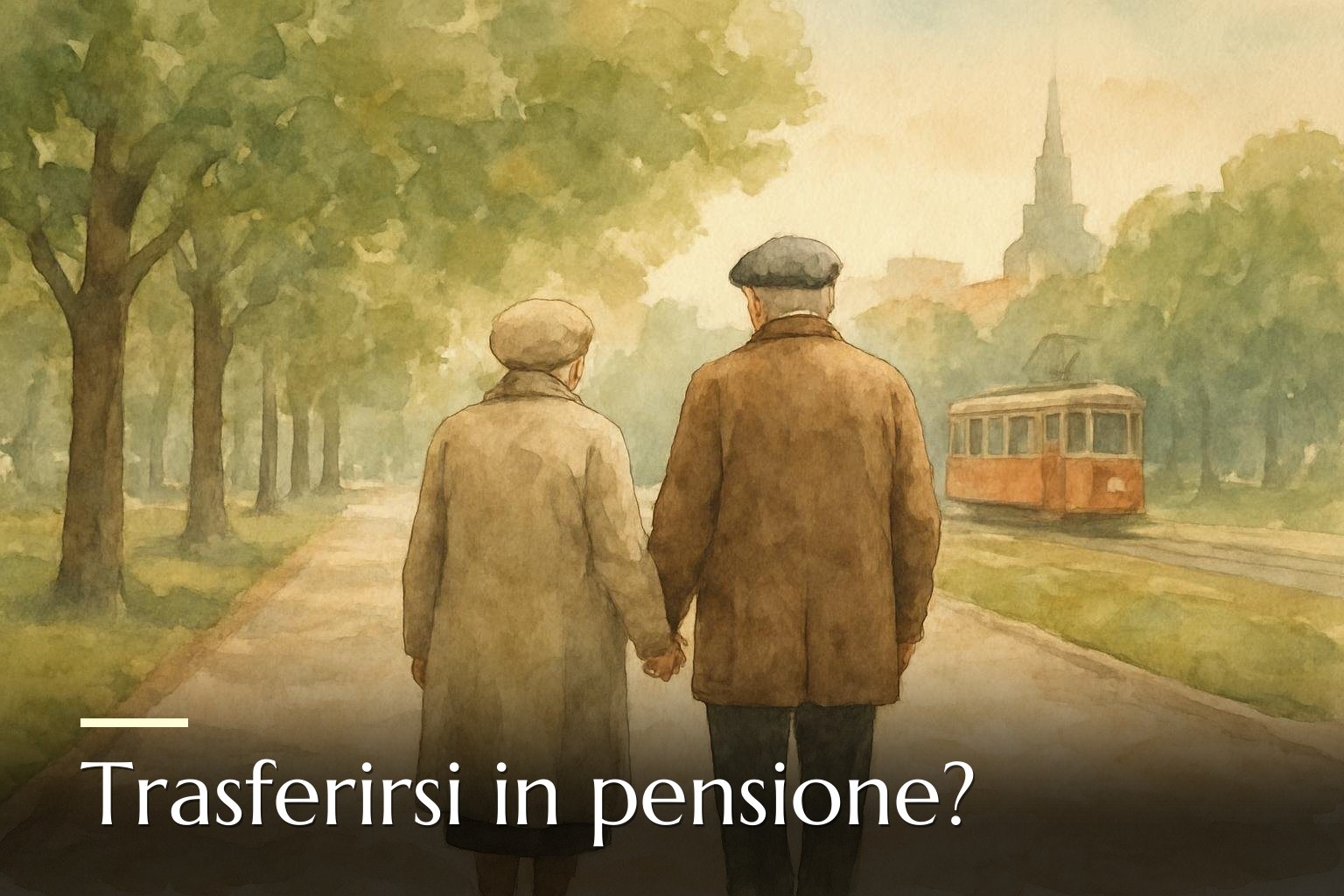
Thinking about changing city at retirement? The decision affects not only quality of life, but also property choice, required budget and ongoing expenses. Evaluating daily costs, proximity to healthcare, transport and social opportunities is key to avoid surprises on your pension income.
In brief
- About half of Italians say they are willing to relocate at retirement; the main reasons are quality of life and reducing cost of living.
- Housing choice changes: preference for lower-floor or serviced apartments, accessibility, nearby amenities and smaller spaces with lower running costs.
- Budget needs assessment including rent, local taxes, condominium fees, heating and possible adaptation works for mobility needs.
- In Turin, it is advisable to consider neighbourhoods with good healthcare services and transport links to maintain quality of life without substantially increasing costs.
Why consider changing city at retirement
Many people in Italy approach retirement with concern; the idea of moving cities stems from two main motivations: seeking better quality of life or lowering living expenses. In Turin and Piedmont, this can mean relocating to smaller towns, suburbs or staying in the city but changing neighbourhood. Each option offers different advantages: lower daily expenses outside the centre but potential compromises on services and social integration.
Impact on housing choice
If you are considering changing city at retirement, the property you seek or keep today should meet new priorities. Key elements are:
- Accessibility: A ground-floor or lift-served flat is preferable to minimise future mobility issues. Check the presence of ramps and door widths for potential aids.
- Nearby services: Pharmacies, clinics, supermarkets and public transport reduce the need for a car and help contain costs. Well-served Turin districts, such as those near the tram network, offer real advantages.
- Size and management: Smaller homes mean lower bills, heating and maintenance costs. Also assess condominium fees: services like concierge or central heating can raise monthly expenses.
- Property flexibility: Consider options like selling and renting elsewhere or usufruct arrangements. Selling a large city home may enable purchasing or renting something more manageable in a lower-cost location.
Effect on retirement budget
Retiring to a new city impacts monthly finances directly and indirectly. Besides rent or remaining mortgage payments, consider local taxes (IMU, TARI), condominium fees, transport costs and health expenses not covered by the NHS. Prudent choices can reduce fixed costs but a realistic simulation of net pension income and area expenses is crucial.
Trade-offs to consider
Often saving means compromises: less cultural offerings, fewer family visit opportunities or challenges accessing specialist services. For older people, proximity to hospitals and specialist centres is critical; hence moving to towns well connected to referral hospitals (including by train) may be wiser than relocating to isolated villages.
How to prepare today, even if retirement is years away
- Make a forward-looking budget: estimate your pension income and compare it to minimum expenses in your target location.
- Visit places at different times: livability varies between summer and winter, especially in small towns.
- Assess the property as an investment: a home in a well-served Turin neighbourhood can be sold or rented out to finance the move; read our guide on how much a rental property yields today to understand the potential.
- Consider where you will spend your time: presence of public spaces and nearby services matters as much as size; therefore, third places influence choice as much as the home itself.
Practical scenarios for those living in Turin
In Turin, retirees considering relocating may choose to stay in the city but change neighbourhoods, move to suburban towns (e.g. Moncalieri, Venaria) or opt for quieter provincial locations. Staying in Turin is worthwhile if you value healthcare, transport network and cultural life; moving out can reduce costs but increase reliance on a car. Weighing pros and cons with concrete cost figures is essential.
Frequently asked questions
Is it worthwhile to sell your city home to move after retirement?
It depends on the local market and personal needs: selling a large city centre home can finance the purchase or rental of a smaller property in a location with a lower cost of living. Also consider rental yields if you prefer to keep the property as an income source.
Which districts of Turin are best suited for the elderly?
Districts with good access to public transport, hospitals and basic services are preferable. Areas served by tram networks and with nearby healthcare facilities offer greater independence without significantly increasing daily costs.
How do condominium fees and heating affect the retirement budget?
They can significantly impact it: central heating or large common areas increase the fixed monthly expenses. It is essential to request details of the ordinary and extraordinary charges of the building before buying.
Is it better to buy or rent after retirement?
There is no one-size-fits-all answer: buying provides stability and protection against rent inflation but requires initial capital and maintenance responsibilities. Renting offers flexibility and fewer immediate burdens; the choice should be weighed against financial availability and life plans.
Practical advice: simulate your retirement budget, visit areas at different times of the year, prioritise accessibility and healthcare services, and consider the possibility of generating income from your current property. If you want specific advice on your situation or to assess the impact on your property’s value in Turin, contact us for a no-obligation consultation.
Do you have questions about this topic or your property?
Talk to us