The cost of deferring renovation: what it means for buyers and sellers in Turin
by Marco Balistreri · · 5 minute read
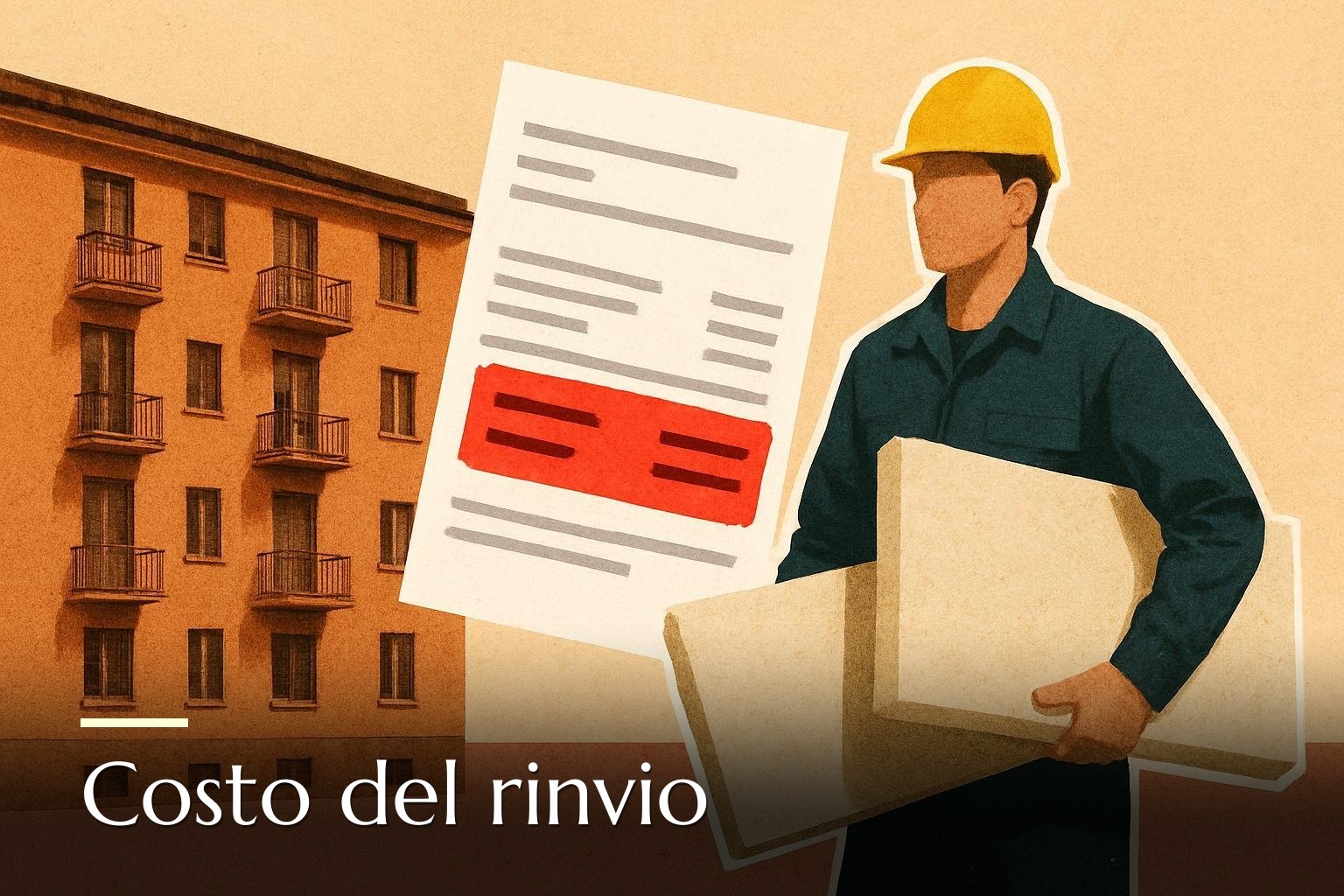
In Turin the cost of deferring energy renovation is not just an abstract notion: it translates into higher bills, more invasive works and a market value that may be penalised compared to efficient homes. Whether you are about to sell or buy, it is useful to know the types of expenses you may face and how they impact your property investment yield.
In brief
- Delaying renovation increases the property's energy expenses: non-renovated buildings consume much more for heating and cooling.
- Lack of updates can reduce the sale price or lengthen time on the market: buyers seek better energy certifications.
- Maintenance and repair costs become more frequent and often more expensive if works are done piecemeal.
- For buyers in Turin, assessing energy income (bill savings) is essential to calculate investment return.
What the "deferral cost" concretely means for sellers and buyers
In Turin, as in the rest of Italy, delaying renovation has four main impacts: higher energy consumption, increased maintenance expenses, property value loss and social impact on lower-income families. For sellers, this often results in price reduction requests or the need to offer discounts for future works. For buyers, it means factoring in immediate expenses or calculating a longer payback period for interventions.
How to assess the "cost" in sales transactions in Turin
There is no single numerical value applicable to every property: cost depends on the building's age, energy class, system type and possible thermal bridges. Practically, during negotiations in Turin it is useful to simulate at least three scenarios: minimum necessary works (boiler replacement, targeted insulation), intermediate works (window replacement, improved envelope) and total renovation (thermal insulation, efficient systems, photovoltaic). Comparing estimated intervention costs with expected annual bill savings helps define a realistic property value range.
The role of energy income in property valuation
The "energy income" is the annual monetary saving a buyer can expect thanks to an efficient property. In Turin, where energy prices significantly affect household budgets, this is a valuation tool: a flat with reduced consumption can be sold at a higher price or rented more easily. Calculating energy income means adding bill savings and any tax incentives recoverable from works (when applicable) and comparing them with the expected initial expense.
Timing and costs: why waiting often worsens the situation
Postponing insulation or system replacement not only keeps consumption high but can increase future costs: replacing a very old system may require regulatory adjustments or repairing structural damage found during works. Moreover, if multiple condominiums delay interventions, unit costs may remain high due to missed economies of scale. For sellers in Turin, this means delay can reduce net sales margin considering future expenses buyers discount in price.
Incentives, market and buyer perception in Turin
Incentives and bonuses can lower net intervention costs but often require bureaucratic procedures and time. Buyers want certainty: a building with started paperwork or certified works is more attractive. In Turin demand for efficient properties is growing, especially in well-connected neighbourhoods near universities; this affects sale times and asking prices.
How to evaluate a property: practical checklist for sellers and buyers
- Check the EPC (Energy Performance Certificate) and request actual consumption data from the last 12-24 months.
- Assess the condition of heating systems and windows: ask their age and certifications.
- Request indicative quotes for the three intervention types (minimum, intermediate, full) with execution times.
- Calculate energy income: estimated annual bill savings and investment payback time.
- Check the possibility of accessing incentives or financing and how these impact the net asking price.
To learn more about solutions for condominiums in Turin and the available benefits, you can read our insights on condominium redevelopment programmes and on condominium incentives 2026.
Also read
Frequently asked questions
How does the property's energy class affect the sale price?
In Turin, a property with a better energy class tends to sell faster and can achieve a higher price compared to an equivalent less efficient one, as buyers value energy bill savings and reduced immediate maintenance needs.
If I buy a property to renovate, how do I calculate the payback period for energy improvements?
Add the estimated costs of interventions and divide by the expected annual savings on bills (including any incentives). You will get an indicative payback time: the shorter it is, the more worthwhile the investment.
Is it worth performing works before putting the property on the market?
It depends on the type and cost of the intervention: works that significantly improve the energy class and immediately reduce consumption can increase the asking price; very costly works with slow returns might not be fully recovered in the sale.
What mistakes should be avoided when evaluating postponement costs?
Do not rely solely on generic estimates: obtaining actual consumption data, professional quotes, and considering accessible incentives prevents surprises and unproductive negotiations.
Practical advice: before selling or buying in Turin, always request the Energy Performance Certificate (APE) and utility bills from recent years, have the system assessed by a technician, and obtain at least one concrete quote for necessary interventions. If you want a personal assessment of your property or assistance estimating costs and energy income, contact us for a detailed, no-obligation opinion.
Do you have questions about this topic or your property?
Talk to us