New infrastructure investments: opportunities for the real estate market in Turin
by Marco Balistreri · · 5 minute read
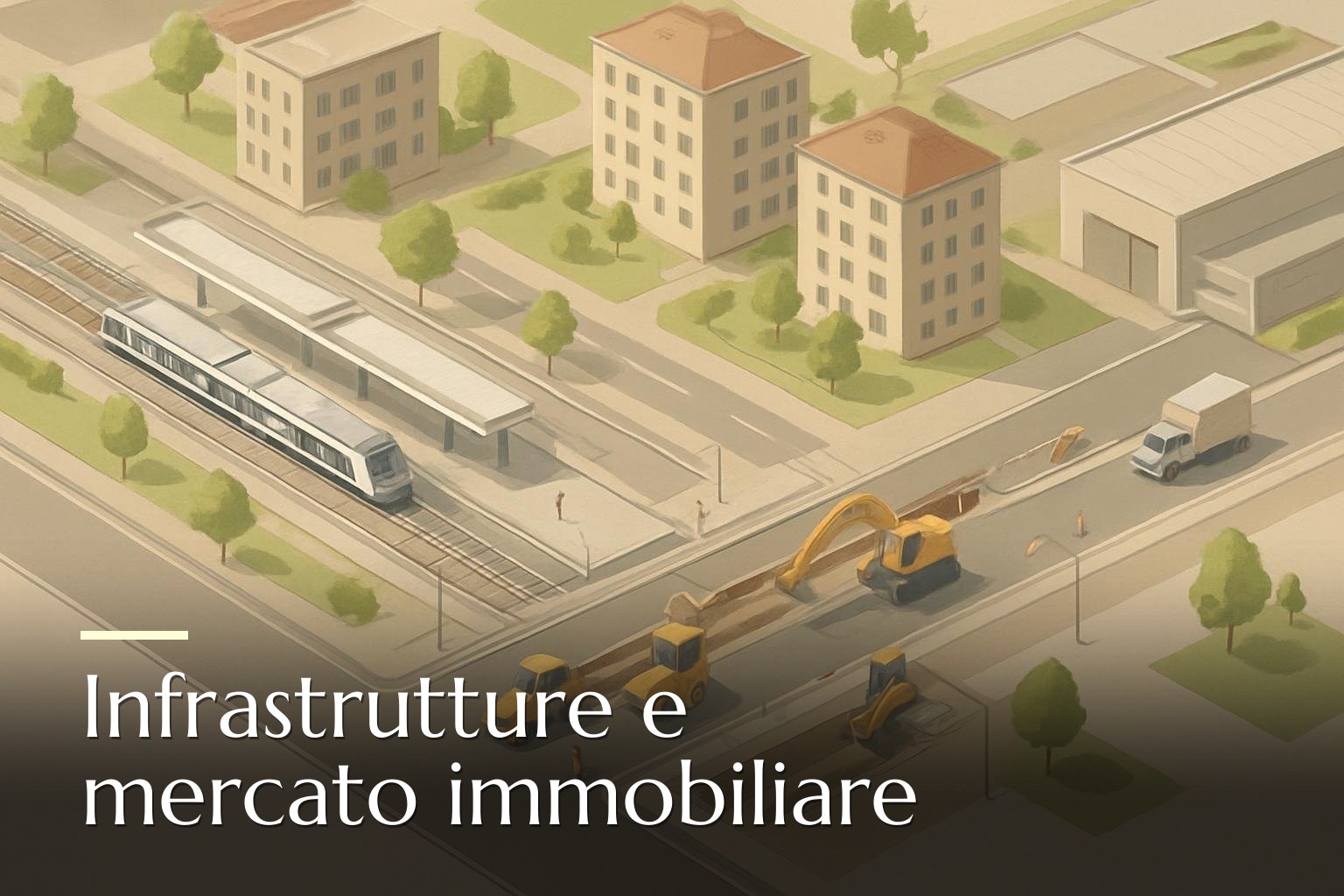
In Turin and the metropolitan area, renewed infrastructure investments — from rail networks to road and port works — translate into real opportunities for those buying, selling or renting homes. Public tenders and major projects shift demand, services and private investments: knowing where and how these interventions happen helps assess revaluations, risks and timing for residential and commercial properties.
In brief
- In 2026, infrastructure investments in Italy are estimated at around 93 billion euros, with a project pipeline exceeding 300 billion.
- Rail, road and logistics projects are among the main drivers of revaluation in suburban areas and transport hubs.
- In Turin, mobility and urban regeneration projects can boost property demand in neighbourhoods near new connections and logistics hubs.
- Owners and investors must assess construction times, planning restrictions and regeneration opportunities to maximise returns.
How infrastructure investments impact the property market
In Turin, a new rail link, upgrading of a highway or expansion of a logistics hub immediately changes accessibility for districts and suburbs. Better accessibility means: increased housing demand from commuters, greater investor interest in short- or long-term rental properties, and an uplift effect on land prices. At the same time, prolonged works can suppress demand short-term: it is important to distinguish between temporary impacts and structural trends.
Where opportunities concentrate around Turin
The most sensitive areas to major works effects are interchange hubs and passenger and freight traffic flows. In Turin, it is advisable to monitor works on stations, regional transport projects and road network expansion plans connecting the city to logistics and industrial poles.
Suburbs and nearby municipalities, where the price per square metre is lower, often benefit first from new links: improving travel time to the centre can turn peripheral districts into attractive alternatives for commuting workers and young families.
Property types favoured by infrastructure investments
- Homes near transport hubs: apartments and detached houses close to new train or tram/metro stops tend to increase in value.
- Properties for students and workersTemporary rental demand rises where new jobs or university hubs are concentrated.
- Logistics and warehousesThe increase in investment in road infrastructure encourages the attraction of warehouses and distribution centres.
- Urban regenerationPublic buildings or disused industrial areas near strategic sites can become residential or commercial development projects.
Risks and factors to consider before investing
Not all projects ensure immediate value increase: the extent of the effect depends on the executive plan, schedule, landscape constraints and environmental sustainability. In Turin, it is necessary to evaluate construction phases that may cause noise and access restrictions, the presence of historical constraints in historic centres, and realistic delivery times of the works. Moreover, increased public investment may lead to greater urban planning controls and new charges for the lots involved.
Practical strategies for sellers, buyers and investors in Turin
For sellers: highlighting proximity to infrastructure projects and accessibility benefits is an effective selling point, but must be balanced with realistic information about timing and construction inconveniences.
For buyers: consider a medium to long term horizon (3-7 years) if the goal is capital appreciation. Check municipal urban plans, project maps and landscape constraints; request information on related services (new stops, cycle paths, public services).
For investors: diversify between residential close to transport hubs and logistics assets in areas with quick access to main arteries; assess expected net yield considering possible periods of partial vacancy during works.
Useful tools and incentives
At national and regional levels, subsidised financing tools, calls and regeneration programmes often support interventions on public properties or the conversion of disused warehouses. In Turin, monitoring municipal announcements and regional initiatives allows you to seize public-private partnership opportunities or access renovation grants.
If you are interested in regenerating a public property or evaluating urbanised areas with constraints, it may be useful to consult local urban planning tools and calls for expressions of interest for redevelopment projects.
Useful links from our blog
To learn more about practical aspects of regeneration and area selection, also read Unused public properties: regeneration opportunities near Turin e Suburbs near Turin: where it pays to look for a home and why consider the city outskirts.
Frequently asked questions
How to understand if a new project will really increase the value of my area?
Check the type of intervention (station, road, logistics hub), scale of investment and schedule. Projects that improve accessibility or create new services tend to generate value increase; projects with only local or temporary impact may have limited effects.
Is it better to buy near an ongoing construction site or wait until completion?
If you seek a lower price and have a medium to long term horizon, buying during construction can be advantageous. For those who want to avoid immediate inconveniences or rent out immediately, waiting for completion reduces operational risks.
What urban planning checks should I carry out before buying near a major project?
Request access to the municipal urban plan, ongoing amendments, restricted areas and environmental provisions. Also enquire about any expropriations or charges affecting the lot.
How does rental demand in Turin change with new infrastructure investments?
Demand for solutions for commuters and temporary workers rises in well-connected areas; opportunities for short-term rentals also grow if there are nearby event hubs or improved services. Residential demand near new transport stops often recovers faster.
Practical advice: map relevant infrastructure projects, assess the investment timeframe, compare expected prices and returns, and consider light redevelopment interventions to increase the property's appeal. If you want a specific evaluation for a property in Turin or surroundings, contact us for personalised advice: we can analyse the relevant infrastructure project and estimate possible impacts on value.
Do you have questions about this topic or your property?
Talk to us